

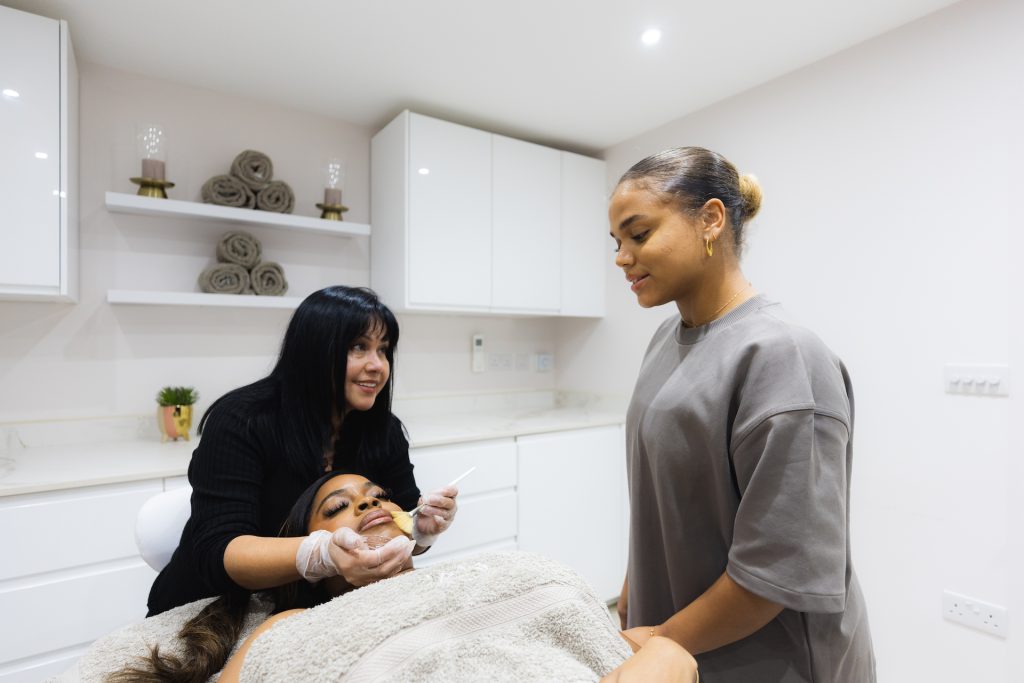
The moment you start looking seriously at working in a medical aesthetics clinic, one question quietly sits underneath everything else. Am I actually qualified enough for a clinic to take me seriously?
For many people entering aesthetics, especially career changers or those coming from beauty or wellness backgrounds, the rules feel unclear. Some say VTCT is essential. Others say it is optional. Social media adds more noise than clarity. The truth sits somewhere more grounded and far more important than ticking a box.
This blog explains whether VTCT qualifications are required to work in a medical aesthetics clinic, what employers genuinely look for when hiring, and why regulated training, clinical confidence, and professional standards matter far more than shortcuts. It is written to help beginners, career changers, and ambitious practitioners understand how real clinics make real hiring decisions.
The short answer is no, VTCT is not legally required in every role within aesthetics.
The real answer is that most reputable clinics expect it, or expect you to be working towards it.
UK law does not currently state that every aesthetic practitioner must hold a VTCT qualification. However, clinics operate within insurance frameworks, clinical governance, and reputational risk. Employers, therefore, apply standards that go far beyond the legal minimum.
When a clinic hires someone, they are not just hiring skills. They are hiring risk. VTCT training significantly reduces that risk by demonstrating regulated education, safe practice, and professional accountability.
VTCT is a nationally recognised awarding organisation regulated within the UK qualifications framework. It is not a brand or a trend. It is a formal education standard that employers understand and trust.
Insurance providers assess training quality before offering cover. VTCT qualifications meet recognised educational benchmarks, which is why insurers frequently require or strongly prefer them when issuing policies.
Unregulated courses vary hugely in quality. VTCT courses follow structured assessment, practical evaluation, and theory standards that protect both patients and practitioners.
Clinics want practitioners who understand skin, not just treatments. VTCT training provides grounding in anatomy, physiology, and skin function that supports safe decision-making.
Employers look for practitioners who understand contraindications, consent, hygiene, and boundaries. These are core elements of regulated training.
Being technically capable is not enough. Clinics value professionals who can consult calmly, explain treatments clearly, and manage expectations ethically.
Medical aesthetics is not retail beauty. Clinics look for maturity, accountability, and a mindset aligned with patient care rather than sales.
For non-medics, VTCT Level 3 Access to Aesthetic Therapies is widely viewed as the minimum credible entry point. It demonstrates foundational competence rather than casual interest.
Clinics invest in staff. They favour practitioners who can progress into VTCT Level 4 Skin Peeling and VTCT Level 4 Microneedling rather than plateau early.
Short courses may teach techniques. VTCT training builds careers. Employers know the difference immediately.
Fast courses rarely allow enough supervised practice, assessment, or theoretical depth. Clinics are increasingly cautious of candidates trained this way.
If a complication occurs, the clinic must justify its hiring decisions. Regulated qualifications offer protection that informal certificates do not.
Clinics protect their reputation fiercely. VTCT training reassures insurers, regulators, and patients alike.
Non-medics working in medical settings must demonstrate credibility. VTCT qualifications help bridge that professional gap.
Many treatments are delegated by prescribers. Delegation requires confidence in the practitioner’s training and judgement.
VTCT does not replace medical training. It ensures non-medics work safely within their scope.
Level 3 opens the door to advanced treatments that clinics actively seek.
Laser and device-based therapies demand strong skin knowledge, which VTCT builds from the start.
Employers value structured learning pathways. VTCT training supports long-term professional credibility.
VTCT trained practitioners speak differently. More precise. More clinical. More trusted.
They understand why treatments are chosen, not just how they are delivered.
Knowing when not to treat is a hallmark of professional maturity.
Injectables still rely on skin knowledge, consultation skills, and professional conduct.
Faster does not mean better. Clinics prefer consistency over speed.
They do. Often more than candidates realise.
The VTCT Level 3 Access to Aesthetic Therapies pathway is designed specifically for clinical progression.
Training providers shape practitioner standards. Employers notice where candidates trained.
Strong academies do not just teach courses. They build careers.
At ALITA Aesthetics Lab International Training Academy, training is delivered with clinical integrity, structured progression, and long-term employability in mind.
ALITA Aesthetics Lab International Training Academy
38 Elizabeth Street, Belgravia, London SW1W 9NZ
0203 993 9503
https://alitacademy.co.uk/